


Wood Guy
4.6535.00 Reviews
App Specs
- Version
- 0.6.6
- Updated On
- License
- Free
- Downloads
- 5,000,000+
- Developer
- Yso Corp
- Categories
- Arcade
- Platform
- Android
Screenshots
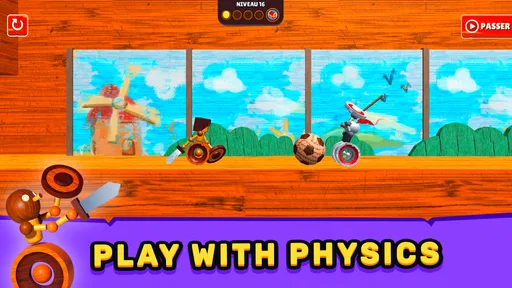
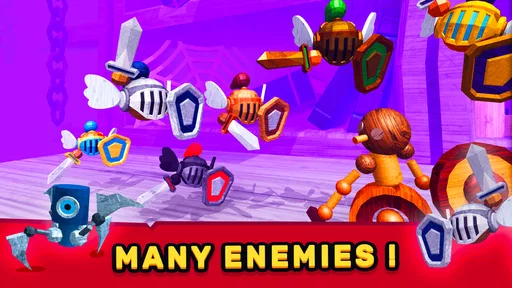

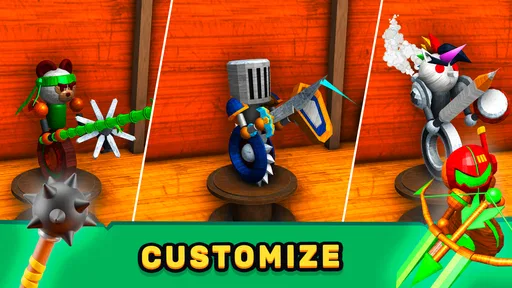
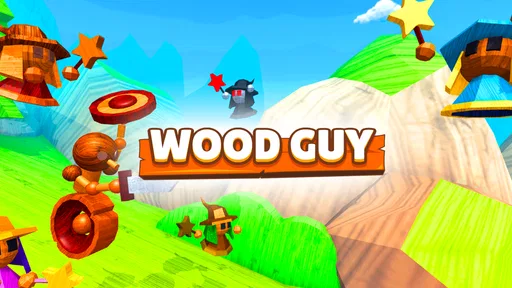
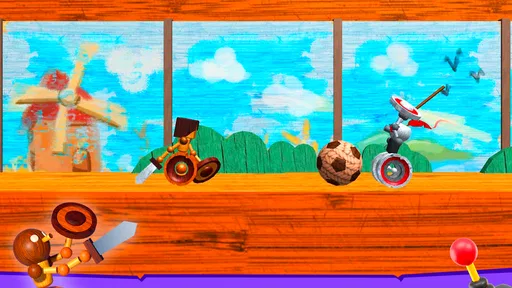
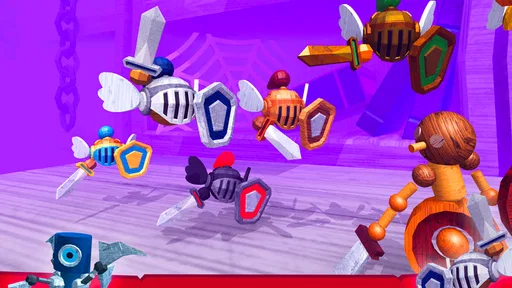

 Analysis by AppCompare
I approached Wood Guy expecting a quick arcade distraction, and that is exactly where it works best. Yso Corp’s game turns the idea of building a wooden fighter into a compact, easy-to-understand experience that suits short breaks rather than long, demanding sessions. I found it most enjoyable when I wanted something light, immediate, and simple enough to play without a tutorial-heavy commitment.
The central appeal is the feeling of shaping a basic wooden character into a warrior. That idea gives the game a clear identity within the arcade category, even though it does not aim for the depth of a full action role-playing game or the precision of a competitive fighter. The experience is free to start, rated for Everyone, and available for devices running Android 8.0 or later, so it is easy to see why it has found a broad audience.
What the wooden-warrior concept feels like in practice
The first thing I noticed is how quickly the game communicates its purpose. There is no complicated premise to decode: you are working with a wooden fighter, and the pleasure comes from seeing that character take shape and become more capable. That directness is valuable on a phone, where I often want to begin playing immediately instead of learning a large set of systems.
Its arcade design also makes the game approachable for people who do not normally spend time with elaborate mobile games. I can imagine opening it while waiting for a bus, taking a few turns during a lunch break, or playing briefly before bed. The experience is better suited to these small windows than to a long evening reserved for a deep campaign.
That simplicity is not the same as emptiness. The wooden-warrior theme gives the progression a visual purpose: improvements feel connected to the character rather than being abstract menus and numbers. Even when the underlying activity is straightforward, the idea of gradually preparing a rough-looking fighter provides a small reason to continue.
My strongest impression is that the game understands the value of a low barrier to entry. I did not need to approach it as a serious competitive project. Instead, I could treat each session as a quick loop: open the game, make progress, enjoy the character concept, and leave without feeling that I had abandoned a major commitment.
Why the presentation works for short sessions
Many arcade games depend entirely on frantic action, but this one has a more tactile identity because of its wooden character. The theme makes the experience feel less interchangeable than a generic collection of taps or fast reactions. I was more willing to return because I remembered the specific image of developing a wooden warrior, not just the fact that I had played another mobile arcade title.
Worth Reading Before You Choose

EA SPORTS FC Mobile 26 Is a Bigger Football Game, but It Takes Time

Flipboard Shows What News Apps Must Do Beyond the Feed

Switching to Android Auto Means Rethinking Your Driving Routine

Google Calendar Makes a Crowded Week Easier to Manage

Ludo King Makes the Most of the Minutes Between Plans

Baby Panda World Brings Quick Play to Modern Phones, but Its Game Library Feels Busy
This is also where the game is more successful than its brief store description might suggest. The appeal is not only the act of playing; it is the small transformation implied by the character. That gives ordinary progress a little personality. I would not call it a deep character-building system, but it is enough to make the arcade structure feel focused.
For younger players, the Everyone rating is reassuring in a general sense, and the uncomplicated concept is easy to understand. Adults may enjoy it for the same reason, especially if they prefer games that do not demand constant concentration. I would still supervise a child’s spending settings, because the free download includes optional purchases ranging from $0.99 to $104.99 per item.
Where it compares well with familiar arcade alternatives
Compared with an endless runner, Wood Guy offers a stronger sense of personal development. Endless runners are often about surviving as long as possible and beating a previous score, while this game’s wooden-fighter idea gives progress a more character-centered feeling. If I want pure reflex practice, an endless runner may be more satisfying; if I want a small sense of building something, this game has the clearer hook.
It also differs from a traditional fighting game. A fighting game usually rewards precise timing, memorized moves, and direct competition, whereas this experience is more relaxed and accessible. I would not choose it when I want a technically demanding duel. I would choose it when I want the fantasy of preparing a fighter without learning a complex combat vocabulary.
Against idle or incremental games, the advantage is its more active arcade identity. Idle games can be convenient, but they sometimes make me feel like I am mostly checking menus. Here, the wooden-warrior theme gives my attention something concrete to follow. The trade-off is that someone who wants deep optimization, detailed statistics, or long-term planning may find the experience too light.
This distinction matters before downloading. The game is not a replacement for a full action title, a serious fighting game, or a strategy-heavy progression game. Its strength is the middle ground: more characterful than a completely abstract arcade loop, but much less demanding than a substantial console-style adventure.
Strengths, friction points, and sensible ways to play
I’d use this section to weigh the game’s easygoing arcade appeal against its limited depth and the spending choices that come with a free download. A useful way to decide is to try the basic play loop in brief sessions before committing money or expecting a long-term challenge; from there, it becomes clearer whether this kind of wooden-warrior progression suits you better than a more demanding arcade alternative.
The best reason to keep it installed
The most convincing strength is its clarity. I always know what kind of mood the game suits. It is a casual arcade title built around a wooden fighter, and it does not require me to reserve a large block of time. That makes it useful as a dependable filler game rather than something I need to organize my day around.
I also like that the concept creates a natural visual target. When a game has a character who is meant to develop, even small improvements can feel more meaningful than a score that simply disappears after a failed run. This is a subtle advantage, but it helps the game avoid feeling completely disposable.
A practical tip is to approach it in short, repeatable sessions instead of trying to force a marathon. I found that the simple loop is more pleasant when I allow it to be a five-minute break. Playing for too long can expose the limits of a compact arcade design, while brief visits preserve the novelty of shaping the fighter.
Another useful approach is to decide early whether I am playing for relaxation or progress. If I treat every moment as an efficiency test, the game can feel narrower. If I use it as a low-pressure activity, the wooden-warrior idea has more room to work. That mindset is especially helpful for players moving between more demanding games.
The meaningful weakness is limited depth
The same simplicity that makes the game accessible can become its main limitation. Players who need a large variety of mechanics, a substantial story, or a demanding skill ceiling may run out of reasons to continue. The concept is appealing, but a concept alone cannot provide the depth of a long-form adventure.
I would also be cautious about expecting a traditional combat experience. The word “warrior” may suggest detailed battles, equipment choices, or tactical matchups. This game should be approached as a light arcade interpretation of that idea, not as a full fighting simulator. Anyone downloading it for advanced combat systems may feel that the premise promises more complexity than the format is designed to deliver.
The free-to-play structure is another point to handle thoughtfully. The game costs nothing to begin, which lowers the risk of trying it, but optional purchases can become expensive at the upper end. I recommend keeping purchases disabled or protected if a child uses the device, and I would avoid spending until I know that the basic loop genuinely holds my attention.
That advice is not a criticism unique to this title; it is simply important here because the game’s appeal depends on gradual engagement. Spending immediately can remove the useful test of whether I actually enjoy the ordinary pace. I prefer to play long enough to understand the loop first, then decide whether any optional purchase adds meaningful convenience.
Who will get the most from it
I would recommend this game to someone who likes casual arcade experiences with a clear visual theme. It is particularly suitable for players who enjoy seeing a simple character become more developed, but who do not want a complicated inventory, a large map, or a long story to manage.
It is also a reasonable choice for families looking for an uncomplicated game concept, provided an adult manages in-app purchase controls. The Everyone rating makes the intended audience broad, while the wooden-warrior premise is easy to explain to a new player. I would still judge the individual child’s ability to handle repeated progression and optional spending rather than relying on the age label alone.
People with older phones may appreciate the relatively accessible operating-system requirement. The current version is 0.6.5, and the game supports Android 8.0 and newer. That makes it worth checking on an existing device before assuming a newer phone is necessary.
On the other hand, I would steer competitive players toward a dedicated fighting game. Those games are better when the goal is precise execution, matchups, and mastery of advanced techniques. I would also suggest a deeper role-playing game to anyone who wants extensive customization, narrative stakes, and a world that keeps unfolding over many hours.
For players who dislike free-to-play design on principle, this may not be the right download even though the entry price is free. The optional purchase range is wide, and that structure can be distracting if I prefer a single upfront payment. In that case, a paid arcade game with a clearly defined purchase model may provide a more comfortable experience.
Everyday scenarios where it fits naturally
Imagine having ten minutes before an appointment. A large role-playing game would be awkward because stopping in the middle of a quest may feel inconvenient. Wood Guy fits that gap better: I can open it, spend a little time with the wooden fighter, and put the phone away without needing to remember a complicated plot or plan a route through a large world.
It can also work as a change of pace after a demanding game. After concentrating on a difficult platformer or competitive match, I may not want another test of reflexes. This title offers a gentler alternative, with the character-building idea providing enough direction to avoid feeling completely aimless.
A less obvious use is as a trial game for someone who is curious about progression but intimidated by role-playing games. The wooden-warrior concept can introduce the satisfaction of improving a character without immediately presenting a dense set of systems. It will not replace a deeper role-playing experience, but it can serve as a friendly first step.
There is a trade-off in each of these situations. The game’s convenience comes from its compact design, and that same compactness means it may not hold attention during a long journey. For a flight or a lengthy commute, I would bring a game with more varied content. For small gaps in the day, this one makes more sense.
What the audience response suggests
The game has an average rating of 4.6 from around thirteen thousand ratings, alongside more than five million installs. Those figures suggest that the straightforward concept connects with a substantial number of mobile players. I would read that as evidence of broad accessibility rather than proof that it will satisfy every type of gamer.
The developer, Yso Corp, has positioned the title in the arcade space, and that classification is useful when setting expectations. The game’s audience appears to value quick entertainment and a recognizable central idea. A high average rating can tell me that many people enjoy the basic experience, but it cannot turn a light arcade loop into a deep action game.
I also pay attention to the distinction between popularity and personal fit. A widely installed game can still be wrong for someone who wants a premium, uninterrupted experience. In this case, the combination of free access, a broad age rating, and a simple wooden-fighter premise explains the reach more convincingly than any assumption that it offers the complexity of a major console release.
My final recommendation
After spending time with it, I see Wood Guy as a focused casual arcade game with one clear idea: make the development of a wooden warrior enjoyable enough to support short sessions. It succeeds when I want something approachable, visually distinct, and easy to leave and revisit. The game does not need a complicated structure to serve that purpose.
Its limitations are equally clear. The light design will not satisfy players searching for deep combat, extensive customization, or a substantial narrative. The free-to-play purchase structure also deserves attention, especially on shared devices. I would not recommend buying anything until the basic experience has proved that it belongs in your regular rotation.
My verdict is positive but specific: try it if you want a friendly arcade diversion built around gradual character development. I would recommend it to casual players, families who manage spending carefully, and anyone who enjoys games that fit neatly into short breaks. I would skip it in favor of a dedicated fighter, runner, or role-playing game if depth and long-term mastery matter more than immediate accessibility.
Wood Guy is at its best when treated as a small, easygoing game rather than a full-scale warrior adventure. That honest expectation makes its strengths more noticeable and keeps its modest scope from becoming a disappointment.
Pros
- Simple controls make it easy to start playing immediately.
- Short levels are convenient for quick gaming sessions.
- Wood-themed visuals give the game a distinctive casual style.
- Progression provides a clear reason to keep completing challenges.
- The lightweight gameplay works well on many mobile devices.
Cons
- Gameplay may feel repetitive after extended play.
- Some challenges can become frustrating without clear guidance.
- The game may offer limited variety compared with larger mobile titles.
- Ads can interrupt the experience
- depending on the version.
- Players looking for deep strategy may find it too simple.
FAQs for Wood Guy
What is Wood Guy and how does the game work?
Wood Guy is a casual mobile game centered on wood-themed challenges and interactive gameplay. Players generally progress by completing levels, overcoming obstacles, and improving their performance through timing, movement, or puzzle-solving mechanics. The experience is designed to be easy to understand, although later stages may require more patience and practice. Before downloading, users should check the current store description because available modes and objectives can vary between versions.
Is Wood Guy free to download and play?
Wood Guy can typically be downloaded without an upfront purchase, but the free version may include advertisements, optional in-app purchases, or both. These purchases might provide extra items, remove advertising, or speed up progression, depending on the version installed. It is a good idea to review the payment information on Google Play or the App Store before downloading, especially if children may use the device.
Can Wood Guy be played offline?
Some parts of Wood Guy may work without an internet connection, which can make it convenient for short gaming sessions while traveling or when mobile data is unavailable. However, advertisements, cloud features, updates, rewards, leaderboards, or certain online functions may require connectivity. Because offline support can change after updates, players should test the game in airplane mode rather than assuming every feature will remain accessible.
Is Wood Guy suitable for children and younger players?
Wood Guy appears to be aimed at casual players and may be suitable for children depending on the age rating, advertising content, and presence of optional purchases. Parents should check the official store rating, privacy details, and permissions before installation. If children use the app, enabling parental controls and disabling unauthorized purchases is recommended, since free games can still display advertisements or offer paid digital items.
What devices are compatible with Wood Guy, and is much storage required?
Compatibility depends on the particular release of Wood Guy and the operating system installed on the device. Before downloading, users should confirm the minimum Android or iOS version listed on the official store page. The initial download may be relatively small, but updates and cached advertising content can require additional space. Keeping free storage available usually helps prevent installation problems and improves general performance.


